The Science of Tempering
Why good chocolate snaps and shines. Cocoa butter can set into six crystal forms, and only one gives chocolate its gloss and snap. How tempering works and why chocolate blooms.
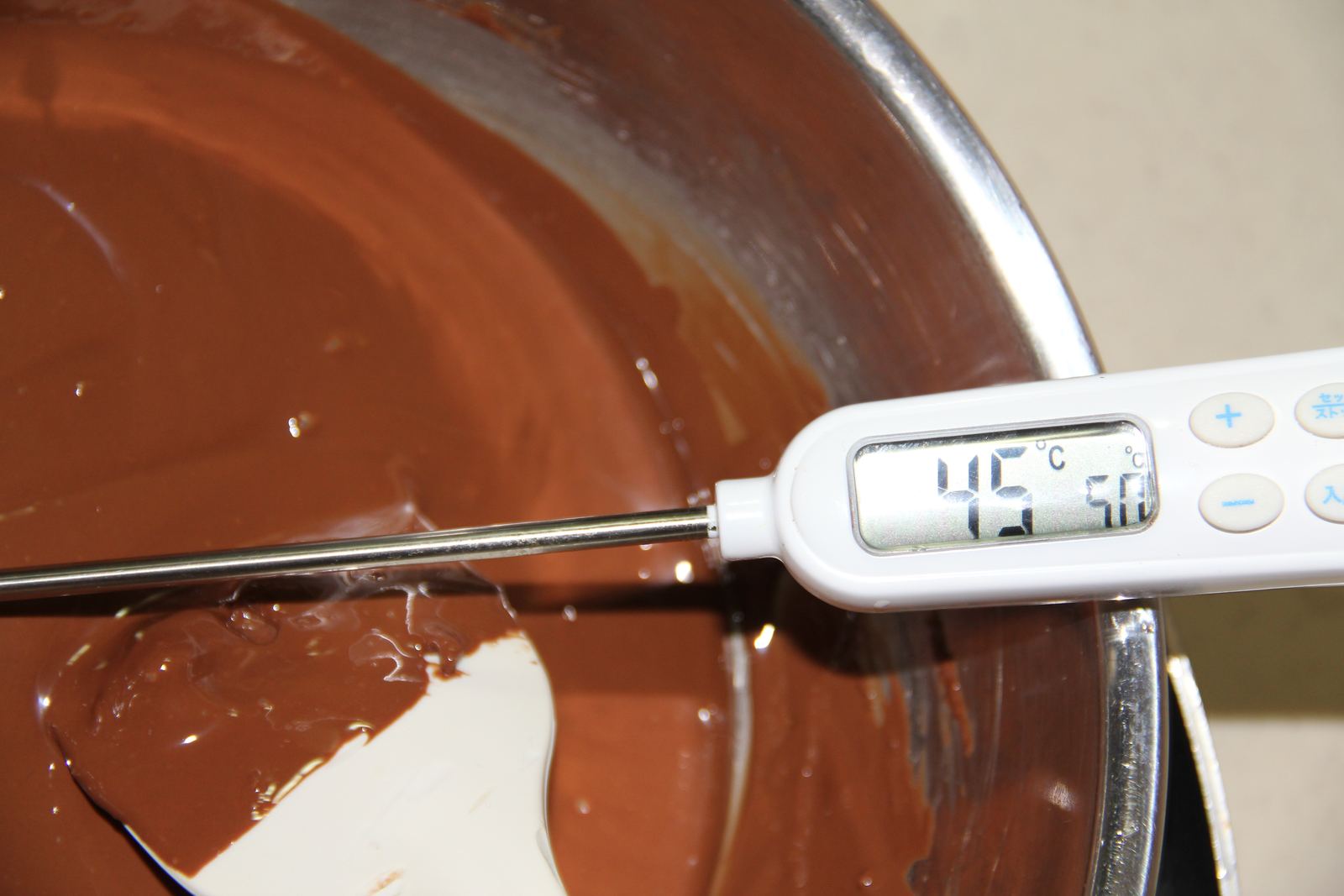
Checking the temperature: Roozitaa, CC BY-SA 3.0
One fat, six crystals
Cocoa butter is the fat that gives chocolate its melt-in-the-mouth texture, and it has a strange talent called polymorphism. When it sets, it can crystallise in six different forms, numbered I to VI. Each melts at a different temperature, from about 17 degrees Celsius for Form I to about 36 degrees for Form VI.
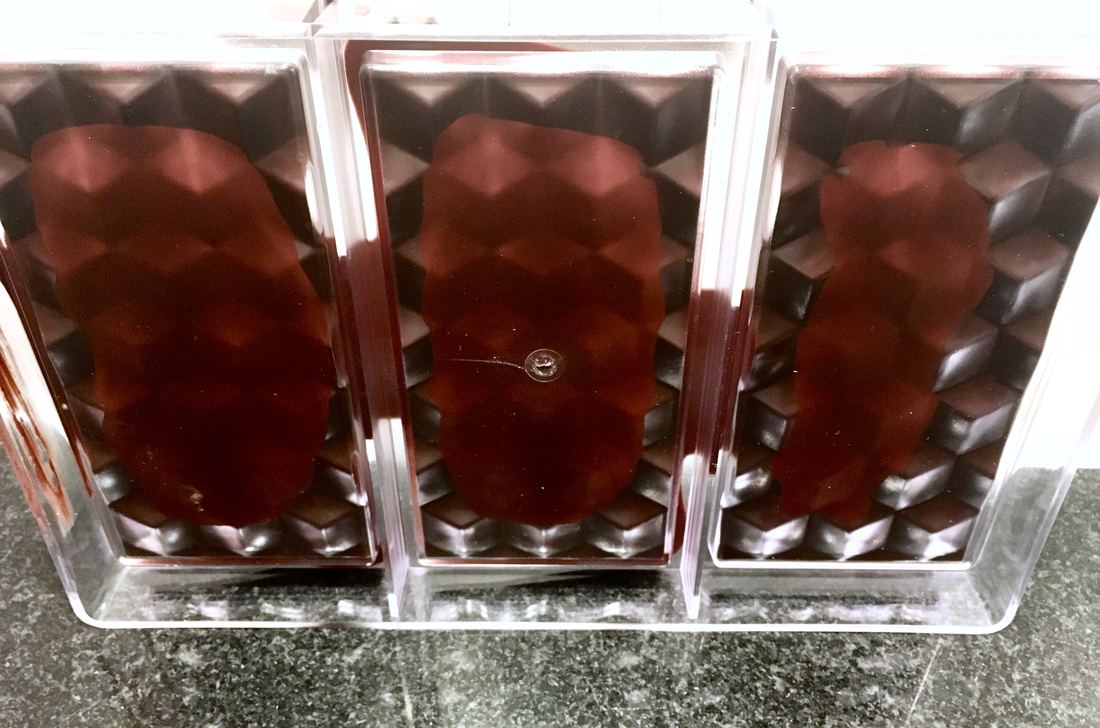
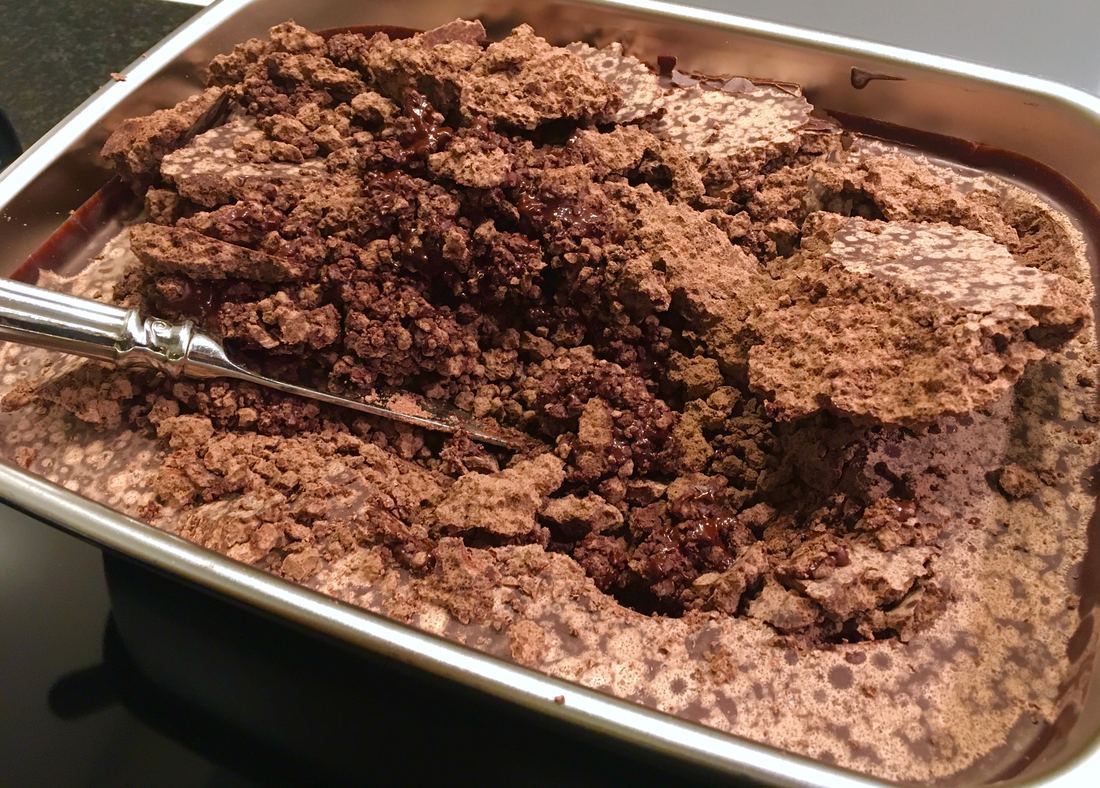
Only Form V, which melts at about 33.8 degrees, gives the qualities people want: a glossy surface, a clean snap and a smooth melt just below body temperature. Melted chocolate left to cool on its own sets in a mix of unstable forms and turns out dull, soft and streaky.
How tempering works
Tempering steers the cocoa butter into Form V. The chocolate is first melted completely, around 40 to 45 degrees, to erase every old crystal. It is then cooled while being stirred until a small amount of fat begins to crystallise, and finally warmed a little, roughly 29 to 31 degrees, so that unstable crystals melt and only the stable ones remain.
Those surviving Form V crystals act as seeds, and the rest of the chocolate copies their pattern as it sets. Milk chocolate needs slightly lower temperatures because milk fat interferes with the crystals.
Doing it at home
Professional makers use tempering machines with several temperature zones. Chocolatiers often temper by hand on a marble slab, spreading and scraping the chocolate as it cools. At home, the seeding method is easiest: melt most of the chocolate, then stir in some finely chopped chocolate that is already tempered, such as a good bar, to supply ready-made Form V crystals.
A quick test tells you if it worked. Smear a little on foil or a spoon. If it sets glossy and firm within a few minutes at cool room temperature, it is tempered.
Why chocolate blooms
Ever found a grey, dusty film on an old bar? That is bloom. Fat bloom happens when chocolate gets too warm, above about 24 degrees, or goes through temperature swings, and fat crystals rise to the surface. Sugar bloom happens in damp or very cold conditions, when moisture dissolves sugar that then dries as a white crust.
Bloomed chocolate looks tired but is safe to eat, and melting and re-tempering it restores the shine. To avoid it, store chocolate wrapped, in the dark, at about 15 to 17 degrees.
- Checking the temperature: Roozitaa, CC BY-SA 3.0
- Tempered: glossy: Zacharie Grossen, CC BY-SA 4.0
- Untempered: dull and soft: Zacharie Grossen, CC BY-SA 4.0
Text written by Chocolate Era.