Why Chocolate Turns White: Bloom
Fat bloom, sugar bloom and storage. That grey or white film on old chocolate is called bloom. What causes fat bloom and sugar bloom, whether it is safe to eat and how to store chocolate.
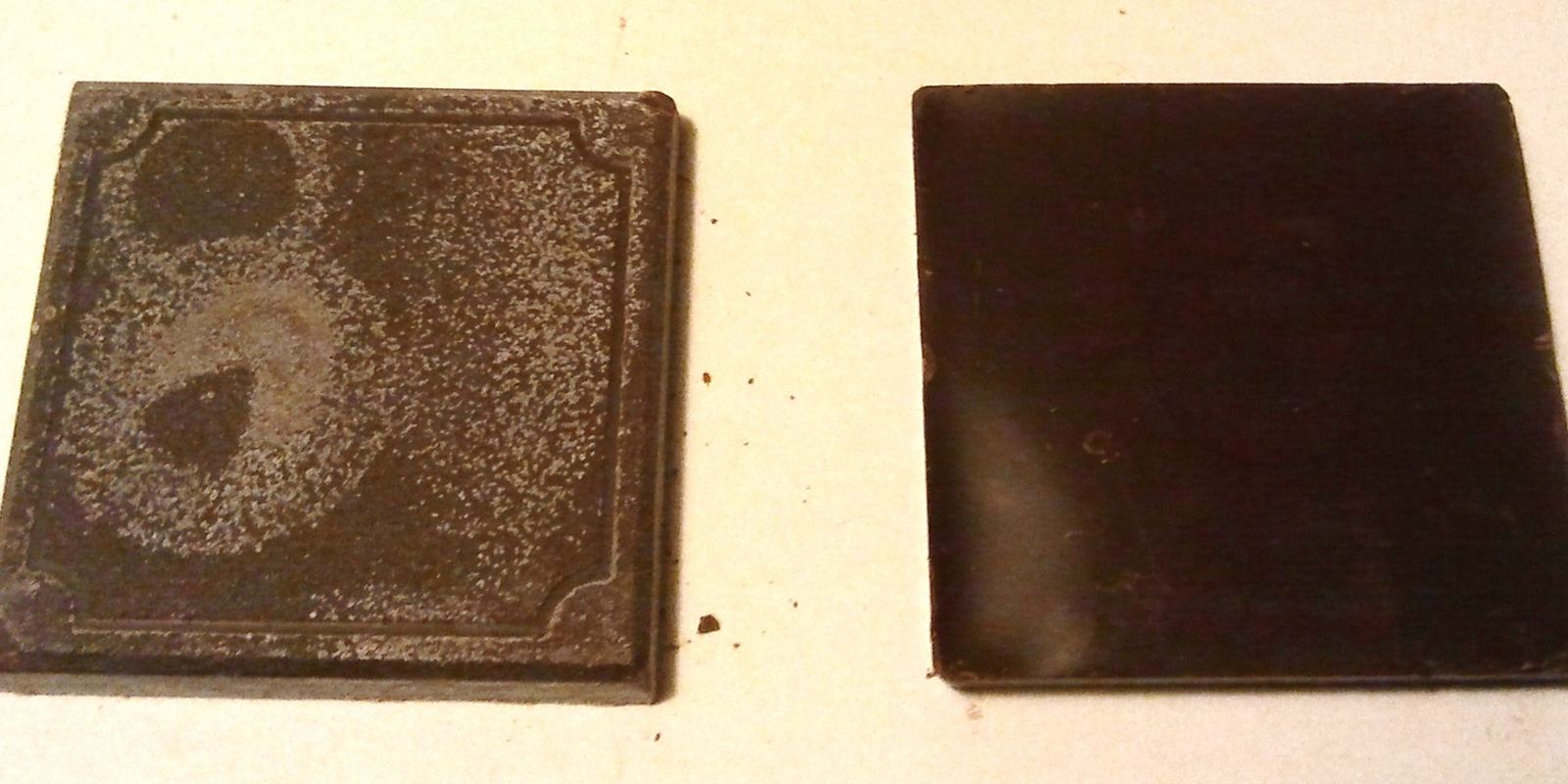
Fat bloom on chocolate: Marcpablo8, CC BY-SA 3.0
Two kinds of bloom
Bloom is the dull, whitish layer that sometimes appears on chocolate. Fat bloom shows up as grey streaks or a soft, greasy film. It happens when cocoa butter melts and recrystallises in an unstable form, or migrates to the surface, often after temperature swings or poor tempering.
Sugar bloom feels dry and dusty. It forms when moisture, often condensation after chocolate leaves a cold fridge, dissolves sugar on the surface; when the water evaporates, sugar crystals remain.
Is it safe?
Yes. Bloomed chocolate is not mouldy or spoiled. It may feel crumbly rather than snapping cleanly, and the flavour can seem flatter, but it is fine to eat. The easiest fix is to melt it: bloomed chocolate is perfect for baking, brownies or hot chocolate, where the surface look does not matter.
The science of temper
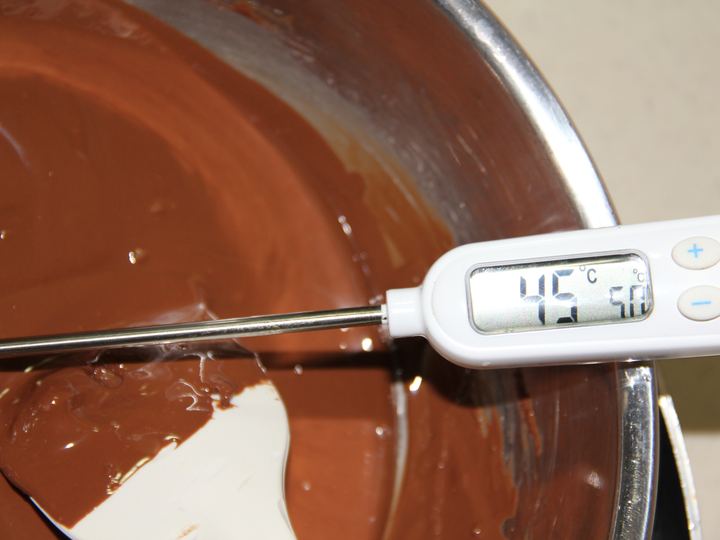
Cocoa butter can crystallise in six different forms. Only one, called Form V or beta crystals, gives the glossy finish, clean snap and smooth melt that chocolatiers want. Tempering is the process of heating, cooling and gently reheating chocolate so that Form V crystals dominate. Bloom is often what happens when chocolate drifts out of that stable structure. See our tempering guide for how to do it.
How to store chocolate
Keep chocolate wrapped in a cool, dry, dark place, ideally around 15 to 18 degrees Celsius (about 60 to 65 Fahrenheit), away from strong smells, which it absorbs easily. Avoid sunny windowsills and hot cars. If you must refrigerate it in a hot climate, wrap it tightly and let it come to room temperature before unwrapping to prevent condensation.
Dark chocolate keeps for a year or more; milk and white chocolate keep for less time because of their milk fat.
Did you know?
Professional chocolatiers check their temper by dipping the tip of a knife or a strip of paper into the chocolate and letting it set. If it hardens within a few minutes with a glossy, streak-free finish, the chocolate is in temper. If it stays soft or sets dull and streaky, it needs more work. Chocolate shops keep display cases cool and dry for the same reason.
- Fat bloom on chocolate: Marcpablo8, CC BY-SA 3.0
Text written by Chocolate Era.
← Natural vs Dutch-Process CocoaCacao Varieties: Criollo, Forastero, Trinitario →