Chocolate Brownies
America's favourite chocolate square. The brownie took shape in the US around 1900 and has divided bakers into fudgy and cakey camps ever since. Its history, science and a recipe.
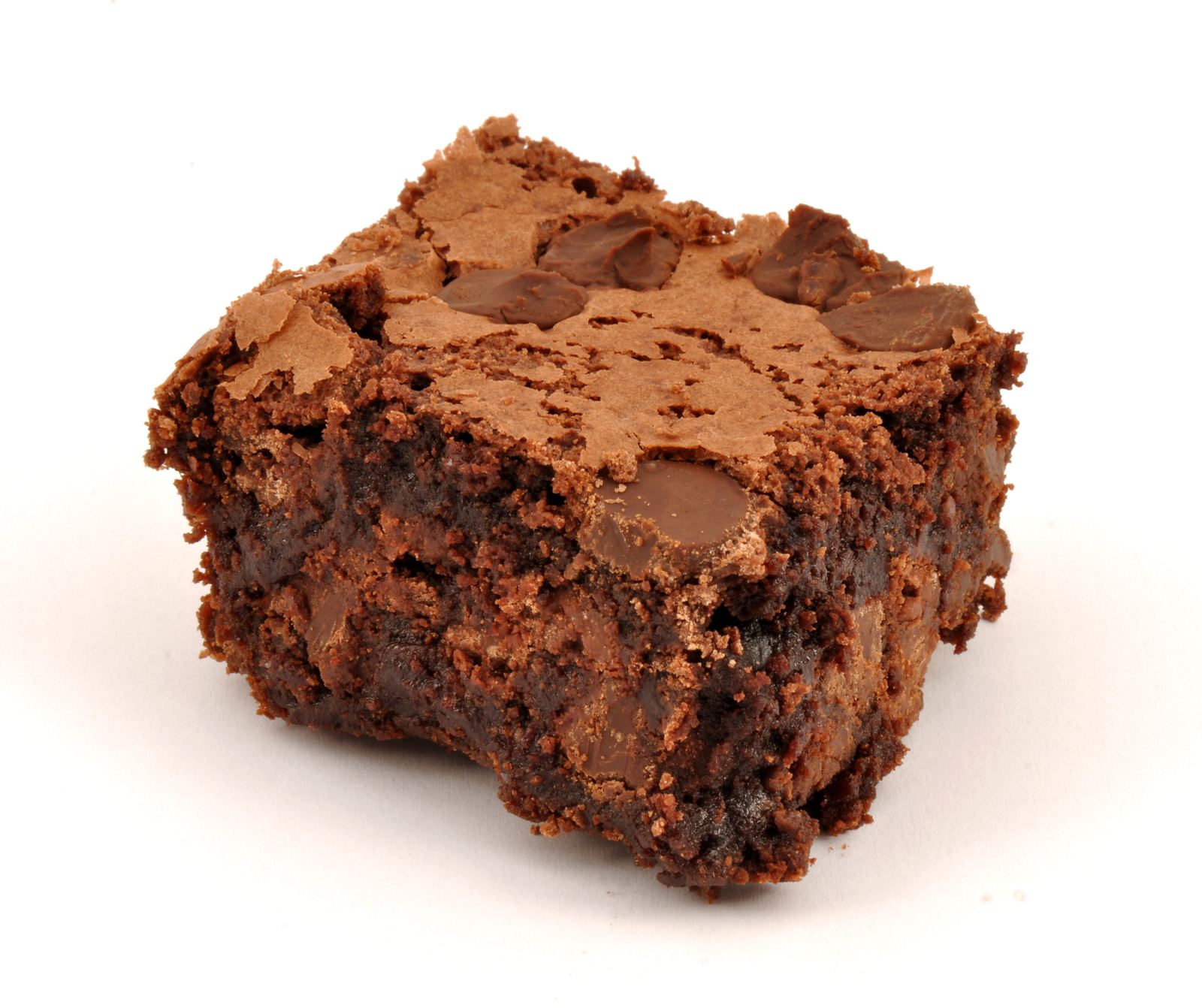
A fudgy brownie: Ɱ, CC BY-SA 3.0
A dessert with a few birthdays
The brownie is an American invention, but its exact birthday is hard to pin down. A popular legend says that in 1893 Bertha Palmer, whose husband owned Chicago's Palmer House Hotel, asked the pastry kitchen for a small dessert that ladies could eat from a boxed lunch at the World's Columbian Exposition. The hotel still serves a walnut brownie with an apricot glaze, though the name brownie was attached to it later.
The word itself first meant something else. The 1896 edition of Fannie Farmer's Boston Cooking-School Cook Book had brownies made with molasses and no chocolate at all.
Becoming chocolate
Chocolate brownies appear in print soon after. A Chicago cookbook published an unleavened chocolate Brownie cake in 1899, and by 1904 recipes with ratios close to modern brownies were running in newspapers and community cookbooks, including Bangor Brownies from Maine.
Fannie Farmer added a chocolate brownie to her 1906 edition, which spread the idea across the country. In 1907, Lowney's Cook Book by Maria Willett Howard added an extra egg and more chocolate, making a richer, fudgier square.
Fudgy or cakey?
The great brownie debate comes down to ratios and mixing. Fudgy brownies use more chocolate and butter and less flour, and the butter is usually melted. Cakey brownies use more flour, sometimes baking powder, and often start by creaming butter and sugar, which beats in air.
Many brownies also have a glossy, paper-thin skin on top. Bakers who love it whisk the eggs and sugar thoroughly before adding the flour, then bake just until the centre sets.
Ways to serve and change it
Brownies are usually eaten by hand, but they also make an easy dessert. Serve one warm with a scoop of vanilla ice cream, a spoon of whipped cream or a dusting of powdered sugar. In North America they are a classic homemade bake, and they are a café favourite far beyond it, including in Sweden.
The basic recipe is easy to change. Nuts, especially walnuts, are the traditional addition, and chocolate chips or chunks make an even richer square. Some older recipes use cocoa powder in place of bar chocolate. Leave out the chocolate entirely, add brown sugar and vanilla, and you have the brownie's golden cousin, the blondie. A brownie keeps for several days in an airtight box, and many bakers think it tastes even better on day two.
Make Chocolate Brownies at home
Ingredients
- 115 g (1/2 cup) unsalted butter
- 115 g (4 oz) dark chocolate, about 60 to 70% cocoa, chopped
- 200 g (1 cup) granulated sugar
- 2 large eggs, at room temperature
- 1 tsp vanilla extract
- 65 g (1/2 cup) plain flour
- 2 tbsp cocoa powder
- 1/4 tsp salt
- 60 g (1/2 cup) chopped walnuts or extra chocolate chunks, optional
Method
- Heat the oven to 175 C (350 F). Line a 20 cm (8 inch) square tin with baking paper.
- Melt the butter and chocolate together in a heatproof bowl over barely simmering water, stirring until smooth. Take off the heat.
- Whisk in the sugar, then the eggs one at a time and the vanilla. Whisk for about a minute until glossy and slightly thickened.
- Sift in the flour, cocoa powder and salt and fold gently until no dry streaks remain. Fold in the nuts or chunks if using.
- Spread into the tin and bake for 22 to 28 minutes, until the top is set and shiny and a skewer comes out with a few moist crumbs.
- Cool completely in the tin before lifting out and cutting into 16 squares. They cut more cleanly once chilled.
- A fudgy brownie: Ɱ, CC BY-SA 3.0
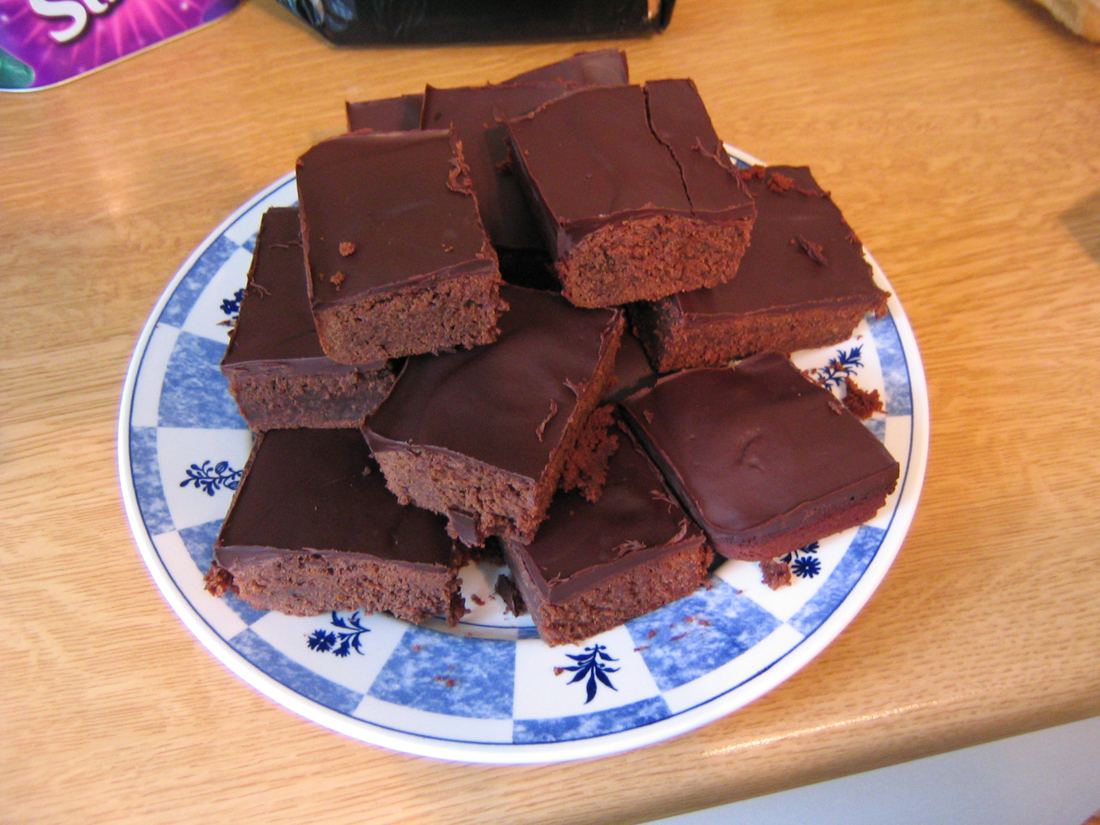
- A plate of brownies: en:User:Gdr, CC BY-SA 3.0
Text written by Chocolate Era.