Conching: How Chocolate Got Smooth
Rodolphe Lindt's 1879 invention. Before 1879, eating chocolate was gritty. Rodolphe Lindt's conche changed that. What conching does to texture and flavour, and how long it takes.
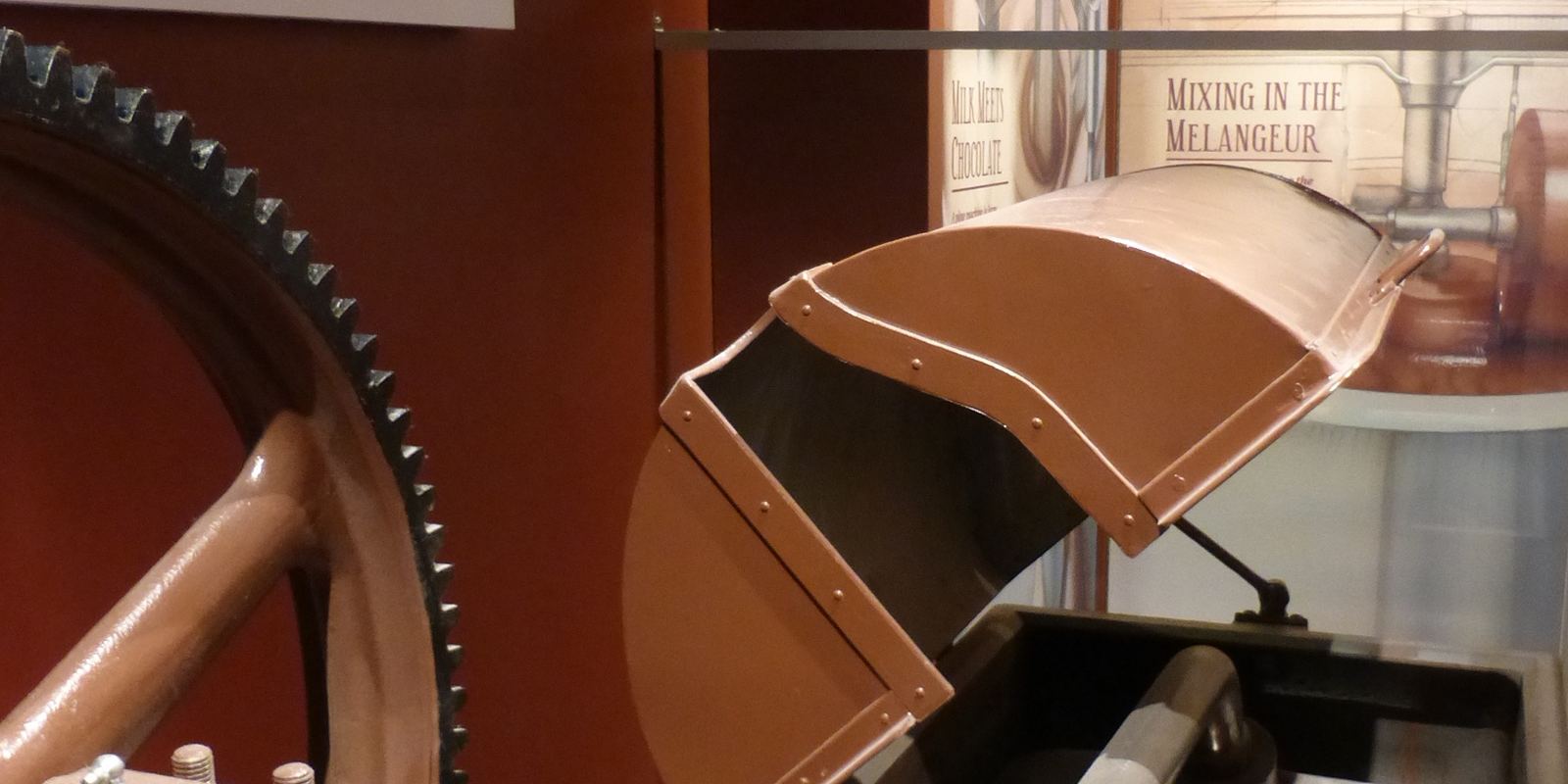
A historic chocolate conche: Z22, CC BY-SA 3.0
Gritty beginnings
Early eating chocolate in the 1800s was crumbly and coarse. The sugar and cocoa particles were large and the chocolate did not melt smoothly on the tongue. Makers knew how to grind cocoa, but not how to make it silky.
Rodolphe Lindt's machine
In 1879, Rodolphe Lindt, a chocolate maker in Bern, Switzerland, built a machine with a heavy roller that pushed liquid chocolate back and forth across a granite bed for hours. The container was shaped a little like a shell, which is why it is called a conche, from the word for shell.
Lindt found that long conching made chocolate smooth and glossy so that it melted beautifully. A popular story says he left the machine running over a weekend by accident, though historians treat that as a legend. His company merged with Sprungli in 1899.
What happens inside
Conching does several jobs. Friction and heat drive off some acidic and bitter compounds, rounding out the flavour. Constant movement coats each tiny particle in cocoa butter, so the chocolate feels smooth. Modern makers grind particles so small, around 20 microns, that the tongue cannot detect them, then conch for flavour.
Conching today
Industrial chocolate is often conched for a few hours in large rotary machines, while some craft makers conch for one to three days to develop flavour. Too much conching can flatten interesting notes, so each maker chooses a time that suits their beans. Read our bean to bar page for the full process from pod to bar.
Taste the difference
You can feel the effect of conching by comparing a smooth Swiss-style bar with stone-ground Mexican chocolate, which is barely conched and stays deliberately gritty and rustic. Both are delicious, but the textures could not be more different. Many craft makers print conching times on their wrappers, so tasting bars with short and long conches is an easy way to explore.
- A historic chocolate conche: Z22, CC BY-SA 3.0
Text written by Chocolate Era.