The Cacao Tree
Where every chocolate bar begins. Theobroma cacao grows close to the equator, flowers on its trunk and is pollinated by tiny midges. Meet the tree behind every chocolate bar.
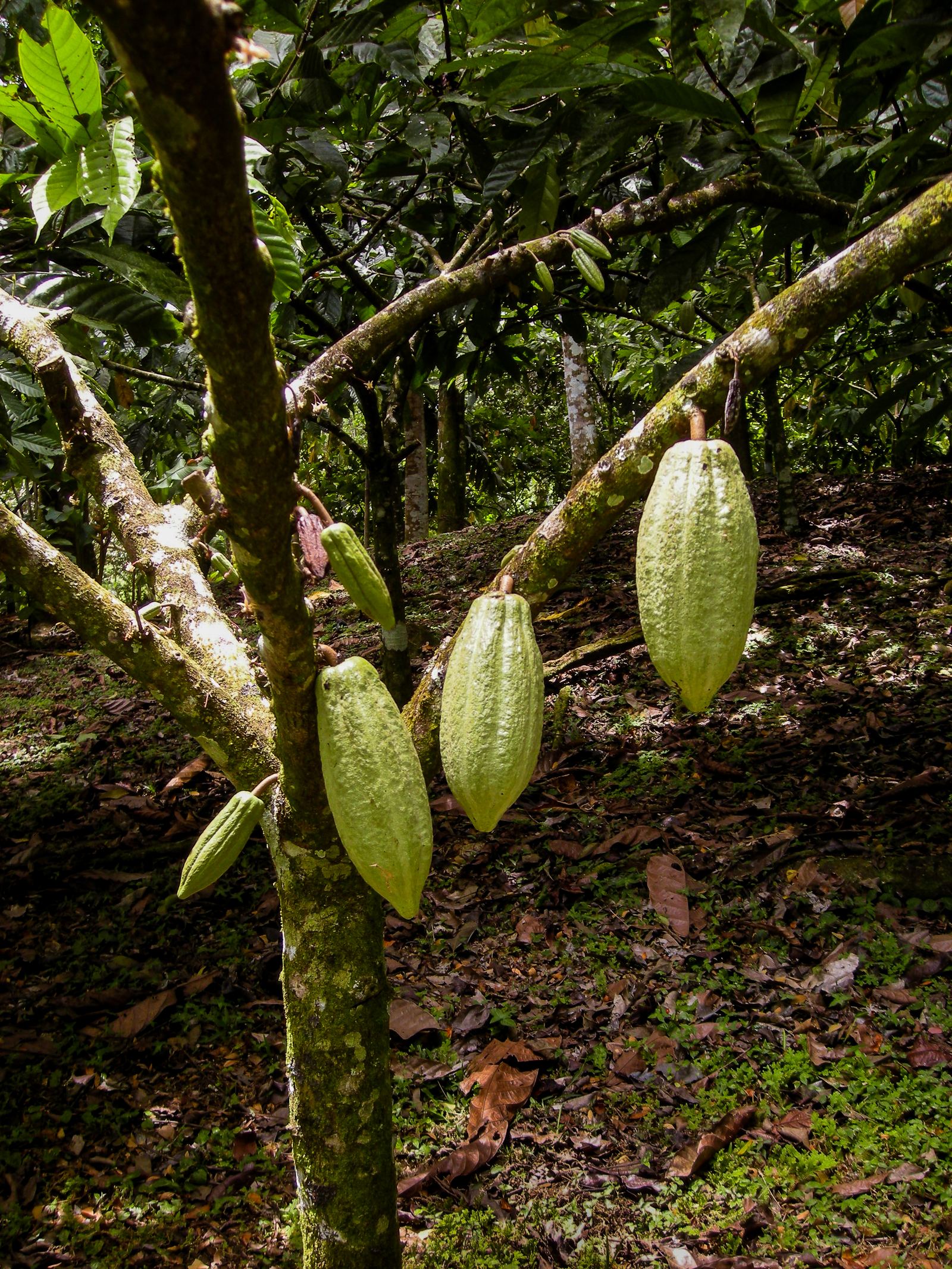
Pods on the trunk: FranHogan, CC BY-SA 4.0
A tree of the rainforest
Theobroma cacao is a small evergreen tree, usually 6 to 12 metres tall, that grows naturally in the shade of the rainforest. It is fussy about where it lives. It needs warm temperatures of roughly 21 to 32 degrees Celsius, plenty of rain, around 2,000 millimetres a year, and it cannot cope with temperatures below about 15 degrees. That is why almost all cacao is grown within about 20 degrees north or south of the equator.
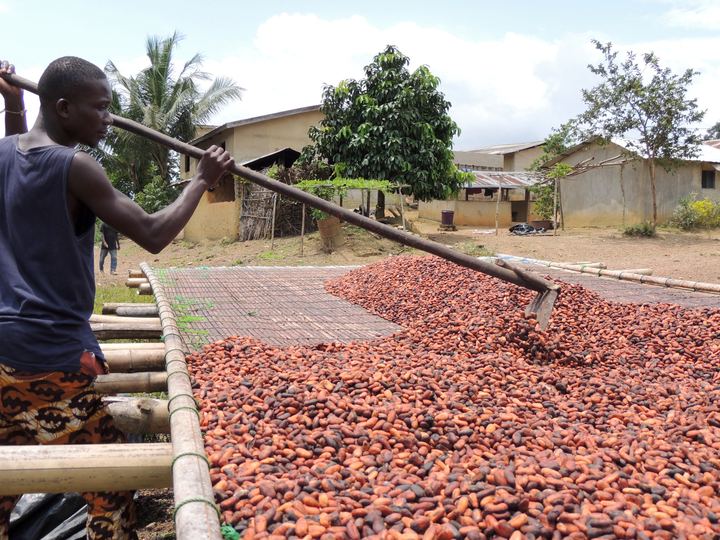
The tree is native to the Amazon basin. Today it is farmed across West Africa, Latin America and Southeast Asia.
Flowers on the trunk
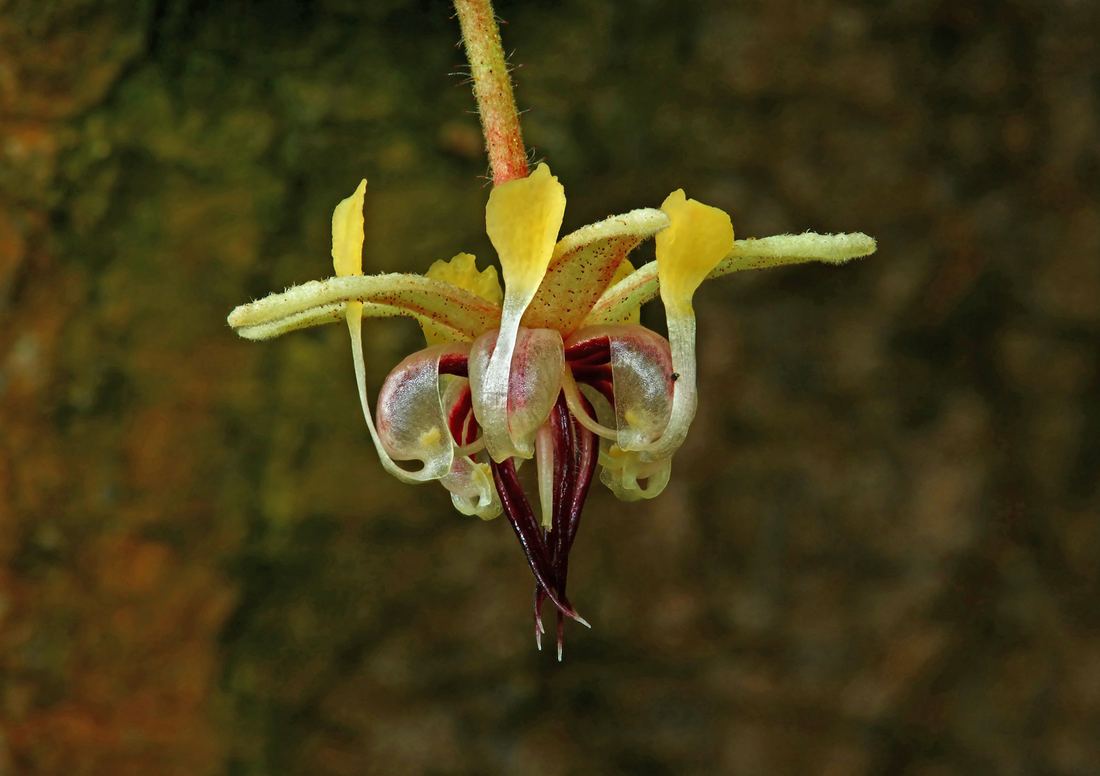
Cacao does something unusual: its flowers grow straight out of the trunk and older branches, a habit called cauliflory. The flowers are tiny, only 1 to 2 centimetres across, and they are pollinated not by bees but by minute flies called Forcipomyia midges.
Very few flowers become fruit. A mature tree may produce around 6,000 flowers in a year yet ripen only about 20 pods. Those pods hang from the bark like small rugby balls, 15 to 30 centimetres long, turning yellow or orange as they ripen and weighing about half a kilo.
Inside the pod
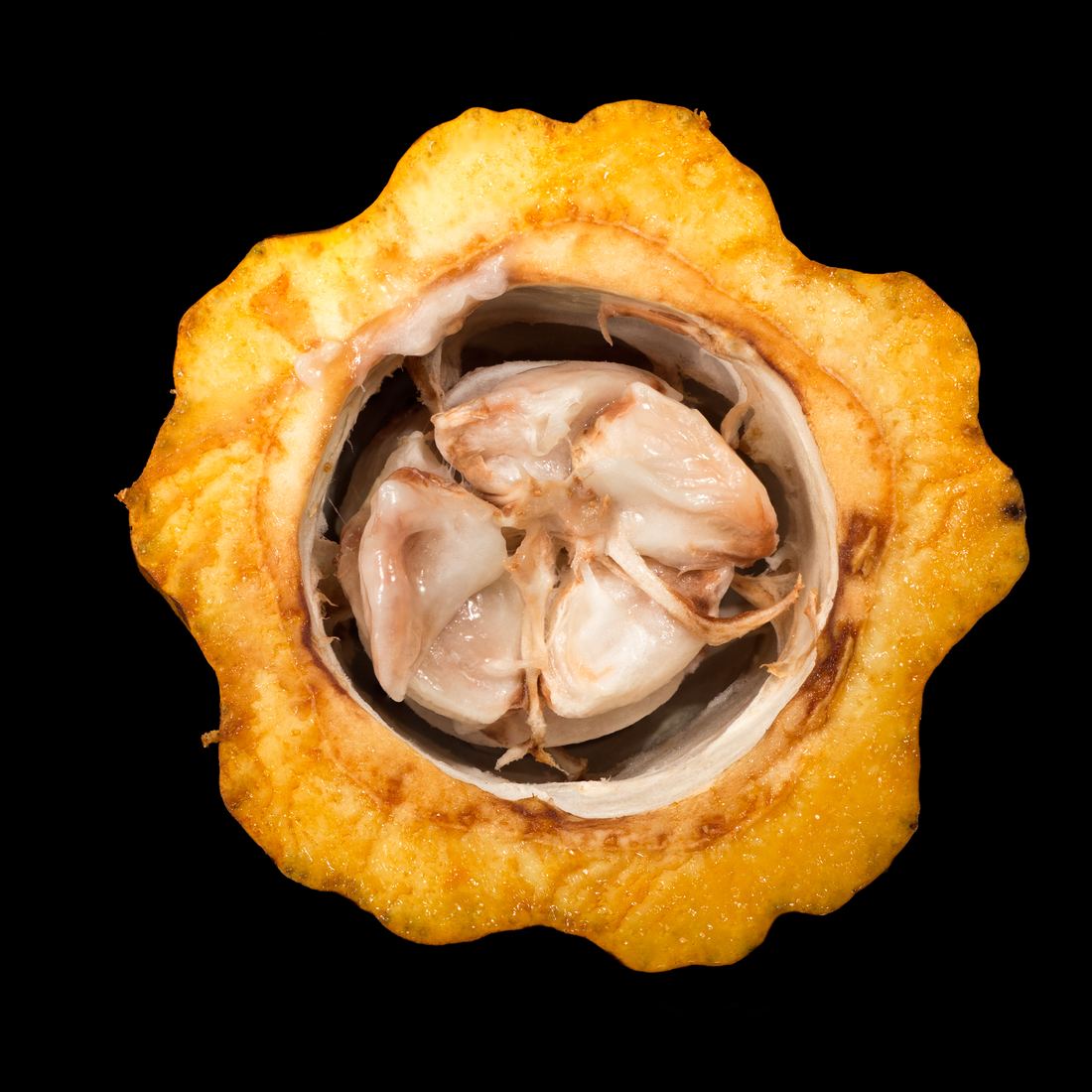
Crack a pod open and you find 20 to 60 seeds packed in sweet, white pulp. The pulp tastes fruity and tangy, and in some countries it is made into juice, jelly and smoothies. The seeds are bitter and purple or pale when fresh. They only become the cocoa beans of the chocolate trade after fermenting and drying.
It takes a lot of them. According to commonly cited figures, about 1,200 seeds, or roughly 40 pods, go into one kilogram of cocoa paste.
Criollo, Forastero and Trinitario
Chocolate makers traditionally sort cacao into three groups. Criollo is rare, aromatic and prized, and makes up only about a tenth of chocolate. Forastero is hardier and more productive, and its beans go into most of the world's chocolate. Trinitario is the name for crosses between the two, named after Trinidad, where early hybrids appeared in the 1700s.
Modern genetic studies have shown that cacao is more varied than these three names suggest, and botanists now describe ten or more genetic groups. The old names live on in marketing and on many craft bar wrappers.
- Pods on the trunk: FranHogan, CC BY-SA 4.0
- A cacao flower: H. Zell, CC BY-SA 3.0
- Seeds in white pulp: Rodrigo.Argenton, CC BY-SA 4.0
Text written by Chocolate Era.
← How Chocolate Conquered Europe's TastebudsWest Africa, the Cocoa Heartland →